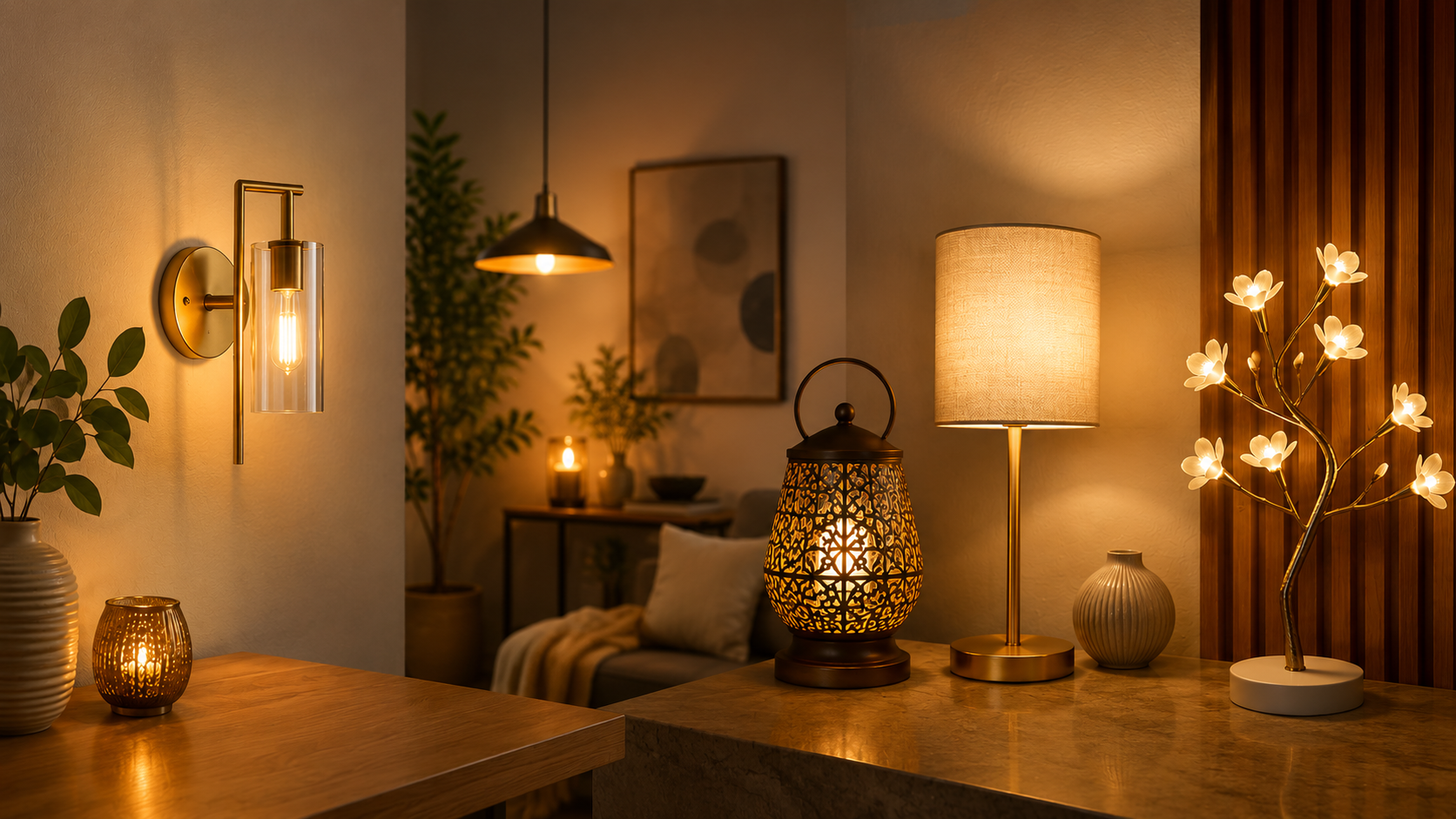


Walk into any beautifully designed room, and you will notice something almost immediately: the lighting feels warm, layered, and intentional. Table lamps do so much more than fill an empty corner—they quietly define how a room feels. The right silhouette can soften architecture, balance a sofa's proportions, or bring symmetry to a bedside vignette. The wrong one can throw off scale, cast awkward shadows, or feel visually disconnected from the rest of the space.
Because table lamps sit at eye level, their visual impact is immediate. They shape ambiance, reinforce design style, and provide practical illumination exactly where you need it. Whether you are searching for a stylish modern table lamp for your living room or a small bedside lamp for a cozy nook, understanding the range of options available can dramatically elevate your living space.
At Nooriva Light, we believe that exceptional lighting transforms houses into homes. Our curated collection of modern table lamps is designed to help you achieve the perfect balance of function and beauty in every room. Let us shed some light on the subject.
Table lamps are often the unsung heroes of interior design. While ceiling lights and wall fixtures provide the foundation of illumination, the charm often lies in the smaller details. Here is why every home needs them:
They Create Atmosphere: Lamps are more than just functional light sources. They shape the atmosphere of a space, highlight décor, and influence how comfortable a room feels.
They Free Up Space: Unlike floor lamps, table lamps sit on existing surfaces—side tables, nightstands, consoles, and desks—without taking up additional floor space.
They Provide Layered Lighting: A table lamp is most impactful when it complements other light sources, creating depth and dimension in the room. Layering light ensures your space feels welcoming at all times of day.
They Add Personality: From sculptural ceramic bases to smoked glass domes and oversized linen shades, table lamps can act as accessories that enhance your décor style.
They Are Versatile: Whether you need focused task lighting for reading, soft ambient light for relaxation, or accent lighting to highlight décor, there is a table lamp for every purpose.
Still wondering if table lamps are right for your home? Consider these compelling benefits:
Space-Saving Design: Table lamps sit on existing surfaces, eliminating the need for additional floor space. This is especially valuable in compact bedrooms, small living areas, and crowded home offices.
Flexible Lighting Options: Table lamps can provide ambient lighting (general illumination), task lighting (focused light for reading or working), or accent lighting (highlighting décor and architectural features).
Enhanced Aesthetics: Well-chosen table lamps add visual interest and depth to any room. They can anchor a seating arrangement, balance a console table, or create symmetry in a bedroom.
Improved Mood and Atmosphere: Table lamps create soft, flattering light that makes spaces feel warmer and more inviting. Unlike harsh overhead lighting, table lamps produce a gentle glow that is easy on the eyes.
Portability: Unlike hardwired fixtures, table lamps can be moved from room to room, allowing you to refresh your lighting scheme whenever you like.
Energy Efficiency: Modern LED table lamps consume minimal energy while providing excellent illumination. Many are compatible with dimmers for even greater energy savings and mood control.
Understanding the different types of table lamps is the first step to finding the perfect one for your space.
Ambient Table Lamps: Designed to provide general, soft illumination that fills a room with warmth. These lamps typically feature fabric or glass shades that diffuse light broadly. They are perfect for living rooms, bedrooms, and entryways.
Task Table Lamps: Designed to provide focused, directional light for specific activities like reading, writing, or working. Desk lamps are a common example, with adjustable arms and downward-facing shades that minimize glare.
Accent Table Lamps: Designed to highlight specific features—artwork, sculptures, or architectural details. These lamps often have narrow beams or decorative bases that draw attention.
Classic and Traditional Lamps: Featuring ornate bases and soft fabric shades that exude timeless elegance. Perfect for vintage-inspired homes and formal spaces.
Modern and Contemporary Lamps: Prioritizing simplicity and clean lines, often crafted with materials like glass, marble, or brushed metal. These pair well with neutral color palettes and clean, architectural spaces.
Mid-Century Modern Lamps: Offering sleek lines and a minimalist aesthetic suitable for contemporary interiors.
Sculptural Lamps: Functioning more like art than lighting, with ceramic bust bases, ribbed textures, and geometric silhouettes that shape the entire mood of a room.
Industrial Lamps: Featuring metal finishes, exposed hardware, and utilitarian designs that bring urban edge to modern spaces.
Getting the height right is one of the most important factors in selecting a table lamp. The wrong height can create glare, cast awkward shadows, or throw off the visual balance of a room.
The most reliable lamp height formula centers on the view from seated eye level. When you are sitting next to the lamp, whether on a sofa or in bed, the bottom of the shade should align closely with your eye line to prevent glare.
Follow these steps:
Measure the height of the table surface from the floor
Add the average seated eye height (typically 24 to 30 inches above the seat cushion)
The bottom edge of the lampshade should land at or slightly below that eye level
In most living spaces, this results in a total lamp height between 24 and 34 inches
| Room | Recommended Lamp Height | Notes |
|---|---|---|
| Bedroom (bedside) | 24–30 inches | Aligns with typical nightstand heights of 24–26 inches |
| Living Room (side table) | 24–34 inches | Bottom of shade at seated eye level |
| Office (desk) | 16–24 inches | Task lighting focused on work surface |
| Entryway (console) | 28–36 inches | Taller lamps create a grander statement |
| Dining Room (buffet) | 28–34 inches | Should not obstruct sightlines across the table |
Expert Tip: The lamp's height should be approximately the same as your nightstand's height, or just 2 to 3 inches taller. The goal is to position the bottom of the lamp shade at eye level when you are seated, which prevents harsh glare and provides adequate illumination.
A lampshade is a literal design statement that defines the mood of your room. From neutral fabrics to bold prints, shades can transform the same base lamp into something completely new.
| Shape | Description | Best For |
|---|---|---|
| Bell | Smaller at top, flared at bottom; emits most light downward | Ambient lighting, transitional spaces |
| Empire | Similar to bell, one of the most popular shapes | Versatile, classic to contemporary |
| Drum | Top and bottom openings are the same width | Modern aesthetics, clean lines |
| Square/Rectangle | Boxy shape, directs equal light from top and bottom | Modern spaces |
| Tiffany-Style | Stained glass, vintage look | Eclectic spaces |
Balanced lamp shade proportions create visual harmony:
Shade height should be approximately 2/3 the height of the base
Shade width should be roughly equal to the height of the lamp base
Shade diameter should be smaller than the width of the table
The shade should fully conceal the harp and hardware when viewed at eye level
Shade Material Matters: Fabric or linen shades soften the light and enhance warm tones, making them ideal for cozy spaces. Opaque or dark shades focus light downward, making cool bulbs feel even cooler. White or light shades brighten the room and work well with both warm and neutral bulbs.
The bulb you choose for your table lamp has a bigger impact than most people realize. It affects the mood of the room, how your décor looks, and even how comfortable the space feels.
| Bulb Type | Efficiency | Lifespan | Best For |
|---|---|---|---|
| LED | Excellent (80–180+ lumens/watt) | 25,000+ hours | All applications |
| Incandescent | Poor (10–15 lumens/watt) | 1,000 hours | Warm ambiance (being phased out) |
| Halogen | Medium (15–25 lumens/watt) | 2,000 hours | Bright task lighting |
| CFL | Good (50–70 lumens/watt) | 8,000 hours | General use |
LED bulbs are the best mix of efficiency, longevity, and low heat. Most table lamps use standard E26 base bulbs with a 60W max incandescent or 9W max LED.
Expert Tip: Choose LED bulbs with CRI 90+ for accurate colors and 2700K–3000K for warm, comfortable light. For reading lamps, prioritize higher CRI and task-appropriate brightness.
The living room is where conversations flow and moods are set. Your table lamps should reflect that versatility.
Scale and Proportion: A lamp that is too big can overpower a table, while one too small may get lost in the setting. The lamp's height should be about one-third of the table's height.
Pairing and Symmetry: Placing identical lamps at both ends of a console table or sofa brings balance and structure. In asymmetrical or modern rooms, a single sculptural base can act as a focal point.
Layered Lighting: Pair your living room table lamp with overhead ceiling lights, wall sconces, or floor lamps for a versatile setup.
Wide shades suit large sofas, while slender shades complement sleek modern pieces.
For a cozy, warm glow, opt for linen or fabric shades in neutral colors.
To add drama, patterned or textured shades can bring personality into the room.
Mismatched lamp pairs, when chosen thoughtfully, can create a more eclectic, laid-back vibe.
Nooriva Light Recommendation: Explore our living room table lamp collection for fixtures that combine style and function—from sculptural ceramic bases to elegant brass accents.
Your bedroom is your sanctuary. Table lamps can transform it into a truly restful retreat.
The Right Height: The standard height recommendation for bedside table lamps ranges between 24 and 30 inches. On a bedside table that is 24–30 inches high, a lamp height of around 20–24 inches is appropriate.
The Goal: The bottom of the lampshade should be between 20 to 24 inches above the top of your mattress. This allows for comfortable reading and task lighting without causing excessive glare or shadows.
Warm Bulbs: Use 2700–3000K bulbs for warm, restful light that supports your natural sleep-wake cycle.
Shade Width: The lamp shade's width should be about one-third the width of your nightstand. This proportion prevents the lamp from overwhelming the nightstand surface.
Position the lamp in the back corner of your bedside table closest to your bed for a warm and inviting glow.
The sweet spot for bedside lamps is 24 to 27 inches tall. You do not want a tiny lamp on a big table or a small table with a towering lamp.
Consider sculptural designs, brass accents, or large shades for statement lamps that elevate room elegance.
Nooriva Light Recommendation: Browse our bedroom table lamp collection for elegant bedside lighting that combines comfort and style.
With more people working from home than ever before, good office lighting has become essential for productivity, focus, and eye health.
Task-Focused Design: A desk lamp designed for reading or working should provide focused, directional light. Look for models with adjustable arms or downward-facing shades that minimize glare and direct light precisely onto the page or workspace.
Brightness: For reading and work, opt for LED bulbs with a brightness between 450 to 800 lumens.
Color Temperature: Choose warm white or neutral white LED light, around 2700K to 3000K. This light is easy on the eyes and comfortable for working. Very cool or blue-toned light can cause screen-related light sensitivity.
Adjustability is key. Look for lamps with adjustable arms, swivel heads, or multiple brightness settings.
Consider your workspace. A desk lamp should only take up a small portion of your workspace.
Position the lamp to minimize glare on your computer screen.
Nooriva Light Recommendation: Our office and desk lamp collection features adjustable designs that reduce eye strain and boost productivity.
The entryway is the first and last space people experience in your home. A well-chosen table lamp can create a welcoming first impression.
Taller Lamps: Taller lamps suit larger spaces with higher ceilings, while smaller, compact lamps work best on side tables or accent furniture in cozier rooms.
Console Table Lamps: Position a lamp on a console table against a blank wall to create a focal point and add ambient lighting.
Statement Pieces: A taller lamp with a pleated shade can add instant elegance to a console table or sideboard.
Place large, bold table lamps on either end of a console table, media cabinet, or sideboard to ground your space visually.
Style your table lamp with stacked coffee table books, a modern sculpture, and a low bowl to create a layered, curated vignette.
Choose a lamp base that picks up an accent color from your rug or artwork.
Nooriva Light Recommendation: Discover our entryway table lamp collection for fixtures that create a warm, welcoming first impression.
Color temperature, measured in Kelvin (K) , describes the appearance of the light a bulb produces. Lower Kelvin values produce warmer, more amber light. Higher Kelvin values produce cooler, more blue light.
| Color Temperature | Appearance | Best For |
|---|---|---|
| 2200K–2700K | Warm, amber glow | Bedrooms, living rooms, dining rooms |
| 2700K–3000K | Warm white | Most residential spaces—living rooms, bedrooms, reading corners |
| 3000K–3500K | Soft white | Kitchens, bathrooms |
| 3500K–4100K | Neutral white | Home offices, task lighting |
| 4000K–5000K | Cool white | Garages, workshops (use sparingly at home) |
Warm lighting (2700K–3000K) creates a soft, cozy glow similar to traditional incandescent bulbs. It is flattering, relaxing, and ideal for evening use. It creates a welcoming, homely atmosphere, softens shadows, reduces glare, and enhances warm décor tones like wood, beige, terracotta, and gold.
Best rooms for warm lighting: Living rooms, bedrooms, reading corners, hallways, and dining rooms.
Best table lamps for warm bulbs: Ceramic or wooden bases, linen or fabric shades, and rustic, Scandinavian, or traditional styles.
Cool lighting (4000K–5000K+) is brighter, crisper, and more energizing. It mimics daylight and is often used for task-focused areas. It helps with concentration and visibility and makes colors appear more accurate.
Best rooms for cool lighting: Home offices, craft or hobby rooms, utility rooms.
Neutral lighting (3500K–4000K) sits between warm and cool—bright but not too stark. It is balanced and versatile, good for multi-purpose rooms, and does not distort colors.
Expert Tip: Warm lighting is the go-to choice for most table lamps because it makes spaces feel comfortable and inviting. When in doubt, choose warmer light—you can always add a cooler task light for specific activities.
Lumens measure the amount of light produced by a light source. Watts measure energy consumption—they are not a reliable indicator of brightness.
| Purpose | Recommended Lumens |
|---|---|
| Soft, ambient glow | 200–400 lumens |
| Everyday use | 400–800 lumens |
| Bright task lighting | 800–1100 lumens |
| Reading | 450–800 lumens |
| Bedside lighting | 300–500 lumens |
| Accent lighting | 200–400 lumens |
| Room | Recommended Lumens |
|---|---|
| Bedroom (bedside) | 300–500 lumens |
| Living Room (ambient) | 400–800 lumens per lamp |
| Office (task) | 450–800 lumens |
| Entryway (ambient) | 300–600 lumens |
| Reading | 450+ lumens |
A standard 100W incandescent bulb produces around 1,600 lumens. But LED technology is far more efficient. Current LEDs typically deliver 100–180+ lumens per watt, compared to 10–15 lumens per watt for incandescent bulbs.
This means a 12W LED bulb can produce the same brightness as a 90W incandescent bulb. When shopping for bulbs, always look at lumens, not watts.
Table lamps are more than just light sources—they are design accessories that can elevate your entire space.
A lamp that is too big can overpower a table, while one too small may get lost in the setting. The lamp's height should be about one-third of the table's height. The lamp's shade should also align with the surrounding furniture—wide shades suit large sofas, while slender shades complement sleek modern pieces.
A lampshade is a literal design statement that defines the mood of your room. From neutral fabrics to bold prints, shades can transform the same base lamp into something completely new.
For a cozy, warm glow: Opt for linen or fabric shades in neutral colors.
For a clean, modern finish: Drum shades with crisp lines offer a clean finish.
To add drama: Patterned or textured shades can bring personality into the room.
Sometimes, one lamp is not enough to complete the look. Using pairs of lamps or creating a symmetrical arrangement can make your living room feel polished and intentional.
Traditional: Placing identical lamps at both ends of a console table or sofa brings balance and structure.
Eclectic: Mismatched lamp pairs, when chosen thoughtfully, can create a more eclectic, laid-back vibe. Try mixing bases of similar color but different shapes, or shades that contrast in size yet share a common palette.
A table lamp is most impactful when it complements other light sources, creating depth and dimension in the room. Pair your living room table lamp with overhead ceiling lights, wall sconces, or even floor lamps for a versatile setup.
During the day: Let natural light dominate while the table lamp subtly adds texture.
In the evenings: The lamp becomes a soft anchor of warmth when overhead lighting is too harsh.
Using dimmable bulbs allows you to further adjust the brightness based on your mood or activity.
Beyond illumination, table lamps can act as accessories that enhance your décor style. Their bases and shades can mirror or contrast with the design elements in your living room.
Ceramic or glass bases add elegance to traditional interiors.
Metallic or geometric bases suit modern spaces.
Colored lamps can inject personality into a neutral room.
Minimalist lamps blend seamlessly into a clean, pared-back aesthetic.
Before making your purchase, run through this essential checklist:
1. Determine the Purpose
Will it be used for reading, ambient lighting, or accent lighting?
Define the primary function before you start shopping
2. Consider the Style and Design
Does it match your room's existing décor?
Consider the silhouette, materials, and finish
3. Optimal Height and Size
Measure your table or surface
Ensure the lamp fits well without overwhelming the space
The bottom of the shade should be at eye level when seated
4. Choose the Right Lampshade
Consider shape, material, and proportion
Shade height should be about 2/3 the height of the base
Shade width should be roughly double the width of the base at its widest point
5. Functionality and Features
Is it dimmable?
Does it have adjustable features?
6. Evaluate the Light Source
Decide on bulb type (LED recommended)
Check brightness (lumens) and color temperature (Kelvin)
7. Check the Bulb Compatibility
Clarify bulb type, base (E26, E27), and voltage requirements
8. Consider Power Source
Hardwired, plug-in, or cordless?
9. Measure Your Space
Desk height, bedside table size, required arm reach
10. Compare and Prioritize
Make a checklist of your top 3 priorities (e.g., adjustable lighting + eye care + design)
| Feature | Ambient Lamps | Task Lamps | Accent Lamps |
|---|---|---|---|
| Purpose | General illumination | Focused activity lighting | Highlighting features |
| Light Direction | Diffused, upward | Directional, adjustable | Narrow beam, focused |
| Best For | Living rooms, bedrooms, entryways | Desks, bedside reading | Artwork, décor, architecture |
| Common Styles | Fabric shades, glass globes, drum shades | Swing arm, adjustable, banker's lamp | Directional, mini spots |
| Typical Height | 24–34 inches | 16–24 inches | Varies |
| Recommended Lumens | 400–800 | 450–800 | 200–400 |
| Bulb Type | Warm (2700–3000K) | Warm-neutral (2700–3000K) | Warm (2700–3000K) |
| Dimmer Compatible | Yes | Yes | Yes |
| Finish | Vibe | Best With | Maintenance |
|---|---|---|---|
| Brass/Gold | Warm, sophisticated | Neutral palettes, warm tones | Wipe with soft cloth |
| Matte Black | Bold, contemporary | Modern, industrial | Dust regularly |
| Brushed Nickel | Clean, versatile | Contemporary, transitional | Easy to clean |
| Bronze | Rich, traditional | Traditional, rustic | Wipe with soft cloth |
| White | Clean, minimal | Contemporary, Scandinavian | Easy to clean |
| Ceramic/Glazed | Artistic, textured | Eclectic, traditional | Wipe gently |
The standard height recommendation for bedside table lamps ranges between 24 and 30 inches. The bottom of the lampshade should be between 20 to 24 inches above the top of your mattress.
For soft ambient lighting, aim for 200–400 lumens. For everyday use, 400–800 lumens is ideal. For bright task lighting, choose 800–1100 lumens.
For most living spaces, choose 2700–3000K (warm white) for a soft, cozy glow. Warm lighting is flattering, relaxing, and ideal for evening use.
LED bulbs are the best mix of efficiency, longevity, and low heat. Choose LED bulbs with CRI 90+ for accurate colors and 2700K–3000K for warm, comfortable light.
The shade height should be approximately 2/3 the height of the base. The shade width should be roughly double the width of the base at its widest point.
Table lamps are designed to produce ambient lighting that illuminates a larger area, while desk lamps (task lamps) are designed to produce focused task lighting.
Yes, but choose a lamp with at least 450 lumens and position it so the light falls directly on your reading material. Adjustable swing-arm lamps are ideal for reading.
Not necessarily. While matching lamps create symmetry, mixing styles can create a more contemporary, artistic look. Consistency in one element—such as finish or scale—helps tie different styles together.
Place table lamps near seating arrangements for reading or accent lighting. When using pairs, placing them on side tables or a console can create symmetrical harmony.
Dust regularly with a soft cloth. For metal finishes, use mild soap and water. For glass, use glass cleaner. For fabric shades, gently wipe with a damp cloth and mild soap solution; rinse and air dry. Avoid harsh chemicals.
Table lamps are one of the most versatile and impactful lighting choices you can make for your home. They save space, add style, and create the kind of warm, layered illumination that makes rooms feel truly finished. From minimalist ceramic designs to sculptural statement pieces, the options are endless—and there is a perfect table lamp for every space and style.
Remember the golden rules:
Choose the right type — ambient, task, or accent — for your needs
Get the height right — 24–30 inches for bedside, 24–34 inches for living rooms
Layer your light — combine table lamps with other light sources for depth and flexibility
Choose warm color temperatures — 2700–3000K for inviting spaces
Match your finish — coordinate with existing hardware for a cohesive look
Install dimmers — for ultimate mood control and energy efficiency
From sculptural brass lamps in living rooms to adjustable desk lamps in home offices, the possibilities are endless. With trends like sculptural lighting, pleated shades, and oversized silhouettes taking center stage, there has never been a better time to embrace the power of table lamps.
At Nooriva Light, we are passionate about helping you create a home that is beautifully lit. Our curated collection of modern table lamps combines exceptional design with superior quality—so you never have to compromise between style and performance.
Ready to transform your home? Explore our full collection at noorivalight.shop and discover the perfect table lamps for every room in your home.


