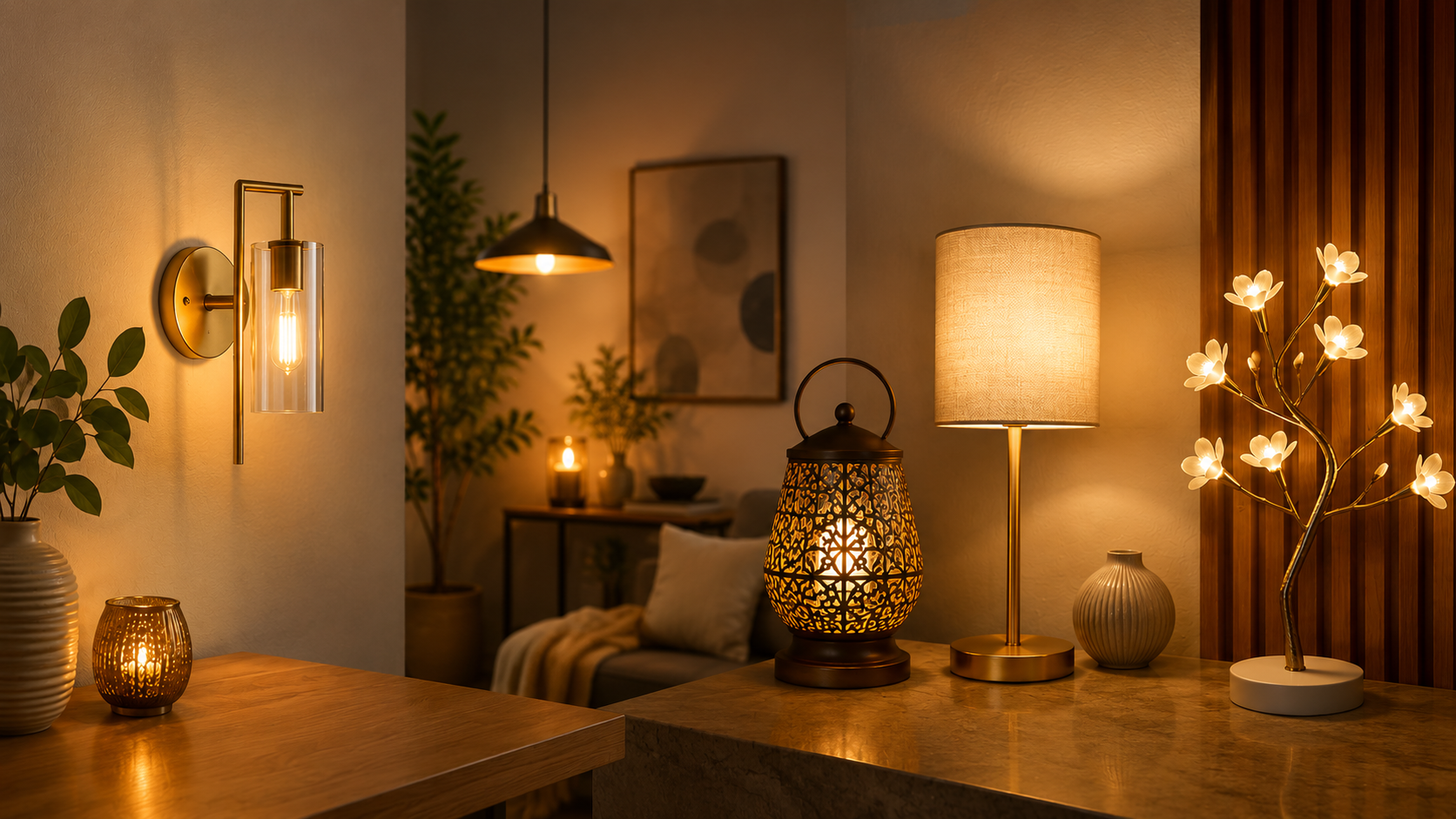


Imagine stepping into your garden after sunset and finding it gently illuminated—pathways glowing softly, trees casting dramatic shadows, and your patio bathed in a warm, welcoming light. Now imagine achieving all of this without running a single wire, without hiring an electrician, and without seeing a spike in your electricity bill.
That is the promise of outdoor solar lighting.
Solar lights have come a long way from the dim, unreliable fixtures of the past. Today's solar lighting technology delivers impressive brightness, extended runtimes, and stylish designs that complement any outdoor aesthetic. Whether you want to line a garden path, highlight a favorite tree, or add security lighting near your front door, there is a solar solution for every need.
From solar wall lights that enhance curb appeal to solar garden lights that create magical nighttime landscapes, the possibilities are endless. With 2026 trends embracing multi-sensory lighting, layered illumination, and eco-friendly technology, there has never been a better time to embrace solar outdoor lighting.
Let's shed some light on everything you need to know about outdoor solar lighting.
Understanding how solar lights work is the first step to choosing the right ones for your home. The technology is elegantly simple, yet remarkably effective.
Solar garden lights follow a straightforward day-to-night cycle:
During the day: A small solar panel on top of the fixture collects sunlight. Its photovoltaic cells convert sunlight into direct-current electricity, which is then sent into the internal charging circuit. This electricity charges a rechargeable battery housed inside the fixture. Strong direct sunlight helps the panel collect more energy, while shade, cloudy weather, or dirty panel surfaces reduce charging performance.
At dusk: A built-in light sensor reads the surrounding brightness. When the panel stops receiving sufficient sunlight, the sensor signals the controller to turn the LED on.
At night: The stored battery power energizes the LED bulb, illuminating your outdoor space without drawing any electricity from your home's grid.
At dawn: The light sensor detects daylight and automatically turns the LED off, allowing the battery to recharge for the next night.
Every solar light contains several essential parts that work together:
| Component | Function |
|---|---|
| Solar Panel | Collects sunlight and converts it to electricity |
| Rechargeable Battery | Stores energy for nighttime use |
| LED Bulb | Provides efficient, long-lasting illumination |
| Light Sensor | Automatically turns light on at dusk and off at dawn |
| Controller | Manages power flow between components |
Expert Tip: A larger or more efficient solar panel can collect more energy during the day, which helps the battery support longer lighting at night. When shopping for solar lights, pay attention to panel size and quality—it directly affects performance.
Why are millions of homeowners making the switch to solar outdoor lighting? The benefits are compelling:
Once installed, solar lights draw zero power from your home's electrical grid. A typical wired LED fixture consuming 10 watts for five hours nightly uses roughly 18 kWh per year—about $2.70 annually per fixture at average rates. Solar reduces that grid draw to zero for lights that rely fully on their panels.
Solar lighting eliminates the need for trenching, running wires, or hiring an electrician for basic installations. This dramatically reduces both cost and effort. You can completely transform your outdoor lighting in just a few hours.
Because solar lights are wireless, you can place them anywhere that receives adequate sunlight. As your yard changes, you can easily move and adjust lights to suit new layouts.
Solar lights are environmentally friendly and much kinder to wildlife than mains-powered lighting. Often emitting a dimmer glow, they are less likely to disturb nocturnal animals. Solar lighting produces zero ongoing carbon emissions after manufacturing.
One of the greatest advantages of solar lighting is its incredible ease of installation. Most fixtures are DIY-friendly, requiring no special tools or expertise.
Most solar LEDs run maintenance-free for months. Swapping a rechargeable battery once every 2–4 years often keeps a fixture serviceable rather than replacing the whole unit.
Solar fixtures add instant curb appeal because they highlight edges, textures, and focal points without visible cords or intrusive conduit. That clean look raises perceived value to buyers and visitors.
Solar lighting is not one single product type. It is a category that includes several very different fixtures for different jobs. Here is a comprehensive overview of the main types:
Solar wall lights mount directly to exterior walls, providing illumination for entryways, patios, garages, and building facades. They are perfect for hands-free arrival at night and can dramatically enhance curb appeal.
Key features to look for:
Brightness: Check the lumens rating to ensure adequate light output
Design: Choose a style that complements your home's architecture
Battery capacity: Larger batteries support longer nighttime illumination
Installation ease: Quality lights offer simple DIY mounting
Best uses: Entryways, front doors, garage exteriors, patio walls, and courtyard entrances. Modern designs include integrated solar panels, decorative sconces, and motion-sensor models.
Solar garden lights are designed to highlight landscape features—trees, shrubs, flower beds, and architectural details. They add depth and visual interest to outdoor spaces after dark.
Best uses: Accenting plants, highlighting sculptures, illuminating flower beds, and creating focal points in garden design.
Design tips for 2026:
Use multi-sensory lighting: add subtle, plant-friendly LEDs and solar fixtures that highlight foliage and sculptural grasses
Define pathways and borders with low-profile solar lights that keep feet safe and add subtle rhythm
Warm white (2700K–3000K) creates a cozy, high-end feel
Pathway lights are the most common solar lighting use and the easiest to get right. They mark the edges of walkways so guests can see where to step, add soft light on stairs and deck steps, and reduce trip hazards around transitions.
Key specifications:
Lumens: 50–200 lumens for gentle, effective pathway illumination
Spacing: Space lights 6–10 feet apart for smooth, even pathway illumination
Height: Follow the height-to-spacing rule: space fixtures about 1.5–2× their mounting height to achieve even coverage
Best uses: Garden walkways, front paths, driveway edges, deck steps, and patio transitions.
Solar fence and deck lights mount on fence posts, railings, deck edges, and steps. They are ideal for adding subtle illumination to vertical surfaces and elevated areas.
Key features:
Post cap lights: Mount on top of fence or deck posts for elegant, downward illumination
Step lights: Install on stair risers for safety and ambiance
Warm white LEDs: Color temperature of 3000–3500K provides a perfect warm glow
Best uses: Fence posts, deck railings, stair steps, balcony edges, and garden borders.
For areas where you want clear visibility and enhanced safety, solar security lights deliver reliable illumination with motion-sensing technology.
Key features:
Motion sensors: PIR sensors detect movement from humans or animals within 16 feet
Brightness: 300–1,000+ lumens for focused security needs
Detection angle: 120°–270° wide-angle detection covers substantial areas
Lighting modes: Constant illumination, motion-activated, or dusk-to-dawn modes
Best uses: Side yards, gates, driveways, front doors, garages, and dark corners.
Selecting the right solar lights for your outdoor space requires careful consideration of several key factors.
Solar lights work best when you have at least a few hours of direct sun most days. The best placement for solar lights is in locations that receive at least 6–8 hours of direct sunlight.
Common sunlight mistakes to avoid:
Placing panels under tree canopies
Installing lights next to fences or tall hedges
Positioning panels facing north in northern hemisphere climates
Placing under roof eaves or pergolas
Professional rule: Minimum sunlight: 6 hours. Recommended: 8 hours or more. Avoid shade during midday hours (10am–3pm).
Solar lighting serves different functions. Determine what you need:
Pathways and steps: Guidance and safety—soft, even illumination
Landscape accents: Highlighting features—directional, focused beams
Security: Clear visibility—bright, motion-activated
Ambiance: Atmosphere—warm, decorative glow
When buying solar outdoor lights, focus on these five specifications:
1. Lumens (Brightness): Read lumens, not watts. Choose 50–200 lumens for pathway stakes, 100–300 lumens for steps and task areas, and 800–2,000 lumens for security floods.
2. Runtime: Confirm hours at rated output. A true dusk-to-dawn fixture should offer 8–10 hours on a full charge or include dimming to extend runtime.
3. Battery: Prefer Li-ion over NiMH for higher energy density and better cold-weather performance. Check replaceability and rated cycle life.
4. Solar Panel: Monocrystalline panels outperform polycrystalline panels in tight spaces. Larger panel area or higher wattage improves charging in partial sun.
5. IP Rating: Pick IP65 or higher for exposed sites. In-ground or submerged fixtures need IP67 or better.
Lumens measure the total amount of visible light emitted by a source. Unlike watts—which indicate energy consumption—lumens directly measure the brightness you can expect.
| Application | Recommended Lumens | Purpose |
|---|---|---|
| Soft decorative lighting | 10–50 lumens | Ambient glow, garden accents |
| Pathway lighting | 50–200 lumens | Gentle, effective guidance |
| Functional pathway | 75–150 lumens | Small patios, clear walkways |
| Steps & task areas | 100–300 lumens | Safety and visibility |
| Spotlights | 300–1,000+ lumens | Focused, directional illumination |
| Security floods | 800–2,000+ lumens | Wide-area illumination |
As lighting designers view it, achieving the brightest look is not simply about maximizing numbers. Strategic light placement can enhance curb appeal and usability. Layer different types of solar lights—path lights for guidance and spotlights for security—to create both visual harmony and functional zones in your landscape.
Pro Tip: Mix low-lumen solar lights with higher-lumen fixtures in the same space to create layers of light, ensuring safety while maintaining aesthetic balance.
The battery is the heart of any solar light. Understanding battery types helps you choose fixtures that will perform reliably for years.
| Feature | NiMH | Lithium-Ion (Li-ion) | NiCd |
|---|---|---|---|
| Energy Density | Moderate | High | Low |
| Cycle Life | 500–1,000 cycles | 2,000+ cycles | Moderate |
| Environmental Impact | Eco-friendly | Moderate | Toxic |
| Memory Effect | No | No | Yes |
| Temperature Tolerance | Good | Better in cold | Handles deep discharges |
| Lifespan | 2–5 years | Longer | Shorter |
Lithium-ion (Li-ion): Offers higher energy density, allowing more energy storage in a smaller space. Performs better in cold weather and lasts for more cycles.
NiMH (Nickel-Metal Hydride): Often preferred for their higher capacity, reduced environmental impact, and freedom from memory effect. They strike a sweet spot between cost, capacity, and lifespan.
Replacement: Batteries in solar lights typically last 2–5 years, depending on usage and environmental conditions. When performance declines, replace with the same type and voltage.
IP (Ingress Protection) ratings indicate the level of protection against dust and water. Understanding these ratings ensures your solar lights survive outdoor conditions.
| IP Rating | Dust Protection | Water Protection | Best For |
|---|---|---|---|
| IP44 | Protected against objects >1mm | Splashing water from any direction | Sheltered outdoor areas |
| IP65 | Dust-tight | Water jets from any direction | Most outdoor applications |
| IP67 | Dust-tight | Immersion up to 1 meter | In-ground fixtures, exposed sites |
| IP68 | Dust-tight | Continuous immersion | Submerged applications |
For exposed outdoor sites: Choose IP65 or higher
For in-ground or submerged fixtures: Need IP67 or better, with attention to seals and O-rings
For extreme conditions: IP67/IP68 provides maximum protection against rain, dust, and UV exposure
Expert Tip: A higher IP rating ensures better protection against moisture and dust. For outdoor solar lights, IP65 is the minimum recommended for reliable year-round performance.
Proper installation ensures your solar lights perform at their best for years.
Position lights where solar panels receive 6–8 hours of direct sunlight daily.
Panel positioning:
Aim panels roughly toward true south in the northern hemisphere (true north in the southern hemisphere)
Match tilt to your latitude for balanced year-round charging
Avoid shade from trees, roofs, and seasonal changes
Test site sun exposure across a day and across seasons before permanent mounting
For stake lights: Drive stakes deep enough to resist frost heave and lawnmower strikes
For wall fixtures: Fasten with stainless hardware and silicone sealant at penetrations
For hardscape: Ensure the surface is clean and level
Pathway lights: Space 6–10 feet apart for smooth, even illumination
Stagger placement: Instead of placing lights directly opposite each other along a path, try staggering them slightly. This creates smoother illumination and avoids the "runway" look
Height-to-spacing rule: Space fixtures about 1.5–2× their mounting height to achieve even coverage and avoid dark gaps
Turn on the light switch (if present)
Allow 1–2 full sunny days for the battery to reach full charge
Test after dark to verify operation
For difficult spots with limited sunlight, consider hybrid setups that combine solar panels with portable power stations for more stable power.
With proper care, your solar lights will remain bright and beautiful for years. Regular maintenance—such as wiping solar panels every month and cleaning fixtures seasonally—keeps your outdoor lights bright and long-lasting.
Clean the solar panel: Use a soft damp cloth or sponge with mild soap and water to gently wipe off the solar panel on top. Avoid abrasive materials that may scratch the panel and reduce sunlight absorption.
Clear surrounding vegetation: Remove any plant overgrowth shading the solar cells.
Wipe housings: Dust fixtures with a soft cloth to prevent buildup.
Replace batteries: Rechargeable batteries typically last 1–2 years. Replacing them annually ensures optimal brightness and reliability. When replacing, match voltage and capacity to your original batteries.
Check for damage: Inspect housings, seals, and mounting hardware. Look for cracks, water ingress, or corrosion.
Adjust for seasonal sun changes: Seasonal sun angle changes may require repositioning lights during winter.
Avoid harsh chemicals: Never use commercial polishes, heavy-duty cleaners, or abrasive materials
Use mild detergents: Mix a bit of washing-up liquid with warm water
Dry thoroughly: Prevent water spots and corrosion
Pro Tip: If lights are still not bright after replacing batteries, you can try to put some more life into the cell itself. Sometimes a full discharge-recharge cycle can revive performance.
Even the best solar lights can experience issues. Here are the most common problems and how to fix them.
Most common causes:
Dirty solar panels blocking sunlight
Worn rechargeable batteries
Poor sunlight exposure
Water damage
Solutions:
Clean the solar panel with a damp cloth
Replace the rechargeable battery with the same type and voltage
Ensure the light receives full sun for at least 6 hours
Check for water ingress and dry thoroughly if needed
Causes:
Battery not fully charged (insufficient sunlight)
Aging battery losing capacity
Cold weather reducing battery efficiency
Solutions:
Move light to a sunnier location
Replace the battery
Consider lights with larger battery capacity
Causes:
Light sensor is shaded or dirty
Sensor malfunction
Light is in "test" mode
Solutions:
Clean the sensor area
Ensure nothing is blocking the sensor
Check if the light has a test mode that needs to be switched off
Causes:
Loose connections
Failing battery
Water in the housing
Solutions:
Check and tighten all connections
Replace the battery
Check seals and dry the housing
Causes:
Panel facing wrong direction
Panel covered by dirt or debris
Shade from trees or structures
Solutions:
Adjust panel orientation
Clean the panel regularly
Trim overhanging branches or relocate the light
Reset Procedure: If issues persist, try resetting: switch off the light, remove batteries or disconnect power, let it sit for a few minutes, then reconnect.
Before making your purchase, run through this essential checklist:
1. Assess Your Sunlight Exposure
Does the location receive 6–8 hours of direct sunlight?
Are there trees, buildings, or structures that will create shade?
2. Define Your Purpose
Pathways and steps: Guidance and safety
Landscape accents: Highlighting features
Security: Clear visibility, motion activation
Ambiance: Atmosphere and decoration
3. Check the Specifications
Lumens: Match brightness to purpose
Runtime: Confirm 8–10 hours on full charge
Battery: Prefer Li-ion or high-quality NiMH
Solar panel: Larger panels charge better
IP rating: IP65 minimum for outdoor use
4. Consider Design and Aesthetics
Does the style complement your home?
Will the finish hold up to weather?
5. Check Installation Requirements
Is it DIY-friendly?
Do you need special tools or hardware?
6. Read Reviews
See what other customers say about real-world performance
Look for feedback on brightness, durability, and battery life
7. Compare Value
Consider quality over the lowest price
Factor in long-term savings on electricity
| Factor | Solar Lighting | Wired Low-Voltage Lighting |
|---|---|---|
| Installation effort | Usually easy; no trenching or wiring | More planning and wiring required |
| Installation cost | Zero installation cost | Significant trenching and labor costs |
| Electricity cost | Zero ongoing cost | Monthly electricity bills |
| Brightness potential | Ranges from low to high, limited by solar charge | Can be consistently bright |
| Reliability | Depends on sun and battery | More consistent |
| Placement flexibility | Highly flexible; easy to move | Limited by wiring |
| Best for | Paths, accents, light security, ambiance | High-security, high-brightness applications |
| Maintenance | Battery replacement every 2–5 years | Bulb replacement, occasional wiring issues |
| Environmental impact | Zero ongoing emissions | Grid electricity consumption |
| Lifespan | 2–5 years (battery-dependent) | 10+ years (fixture-dependent) |
Solar wins for: Easy installation, zero ongoing costs, flexible placement, and eco-friendly operation.
Wired wins for: Consistent brightness regardless of weather, higher maximum brightness, and applications requiring 24/7 reliability.
Our recommendation: For most residential applications—pathways, garden accents, decorative lighting, and basic security—solar lighting is the superior choice.
Outdoor solar lights convert sunlight into stored electricity during the day using a solar panel and rechargeable battery. At dusk, a light sensor automatically turns on the LED, providing illumination without any wiring or electricity costs.
A quality solar light should offer 8–10 hours of illumination on a full charge. Runtime depends on battery capacity, sunlight exposure, and seasonal conditions.
For most paths and garden walkways, aim for 50–200 lumens per light for gentle, effective illumination.
Lithium-ion (Li-ion) batteries offer higher energy density and better cold-weather performance. NiMH batteries are also a popular choice, offering a good balance of cost, capacity, and lifespan.
Rechargeable batteries typically last 1–2 years in solar lights. Replacing them annually ensures optimal brightness and reliability. Higher-quality batteries can last 2–5 years.
For most exposed outdoor applications, choose IP65 or higher. For in-ground or submerged fixtures, choose IP67 or better.
No. Solar lights require rechargeable batteries (NiMH or Li-ion). Regular alkaline batteries are not designed for the charge-discharge cycle and will not work properly.
The most common causes are dirty solar panels, worn batteries, or insufficient sunlight exposure. Clean the panel, replace the battery, and ensure the light receives at least 6 hours of direct sun.
Yes, but performance may be reduced due to shorter days, lower sun angles, and cloudy conditions. Position panels to maximize winter sun exposure and consider lights with larger battery capacity for cold-weather performance.
Space solar pathway lights 6–10 feet apart for smooth, even pathway illumination. For the best effect, stagger them slightly rather than placing them directly opposite each other.
Outdoor solar lighting has evolved into a sophisticated, reliable, and beautiful way to illuminate your home's exterior. From guiding guests along garden pathways to highlighting your favorite trees and enhancing home security, solar lights offer an eco-friendly, cost-effective solution that requires minimal maintenance.
Remember the golden rules:
Assess your sunlight — 6–8 hours of direct sun is essential for optimal performance
Match brightness to purpose — 50–200 lumens for pathways, 300–1,000+ for security
Choose quality components — Li-ion batteries, monocrystalline panels, and IP65+ ratings deliver the best results
Place strategically — space lights 6–10 feet apart, stagger for natural flow, and avoid shade
Maintain regularly — clean panels monthly, replace batteries annually
Layer your lighting — combine pathway lights, accent lights, and security lights for depth and functionality
From solar wall lights that enhance curb appeal to solar garden lights that create magical nighttime landscapes, the possibilities are endless. With 2026 trends embracing multi-sensory lighting, layered illumination, and eco-friendly technology, there has never been a better time to embrace solar outdoor lighting.
Well-chosen solar lights do more than brighten a path—they create an inviting outdoor environment that enhances your home's beauty while reducing your environmental footprint. The technology continues to improve, making solar lighting an increasingly smart choice for modern homeowners.
Ready to transform your outdoor spaces? Explore solar lighting options that match your style, budget, and functional needs. With the right fixtures and proper placement, you can create an outdoor oasis that shines brilliantly—day and night.


